As time as moves people are constantly going through changes. In the last few hundred years we have seen technology advance at a very drastic speed. Particularly in recent years. As more technology develops the demand for resources to keep that technology going increases. Naturally as this becomes more and more true for most of the world this speed in technological advances effects people's lives. Particularly those located where these resources are found. Whole cultures have been dramatically changed by this.
Even here in America you can hear people talk about 'The Good Old Days' when the community spirit was much stronger. In places where people can not even afford the technology that they work so hard to keep running, as is the case in much of Africa, Asia and Latin America, the shift in culture hits hard and swift and leaves a sort of confusion that is a bit unique from the situation in the states. In America it's different because American culture has been built on the ideal of money and colonialism. In 'developing' areas The struggle between what once was and what has to be because they have no control is constantly causing conflicts large and small.
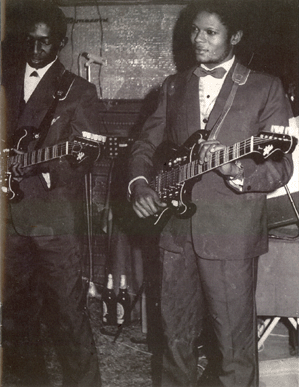
One of the smaller conflicts is that of the loss of communal spirit due to the restraints of work and money. Where it was once customary to show up in any village and expect to get fed, have a place to sleep and bathe, accepted with open arms, this can no longer be accepted in an urban society. A society in which you work like a dog to get just *enough* for you and yours. In this new society it would be rude to show up at a person's house (especially where there are children) and expect to be fed. With money being the only way to get food and seeing as though money is so hard earned yet still scarce, this is an understandable shift in culture. Bavon Marie Marie & Les Negro Sucess see it as a negative shift and sing to us how they feel about this loss of community within African culture. On the song Maboke Ya Cherie they sing about a man who has 5 kids and he has to count the pieces of meat he has and can't share. Even with him AND his wife working he doesn't have enough to feed an unexpected guest. Times have changed. Particularly in places like Kinshasa where there are large populations of people. Much of the original culture has practically disappeared.

residential downtown kinshasa circa 2006 (picture courtesy of the blog Eye on Africa)
We must remember too that this song only talks about a small portion of the drastic changes that have come about due to these great advances in technology. There is constant war and famine across the globe among the 'have-nots' all so that the 'haves' may have there technology. Where ever there is a need for charity there has always been a presence of exploitation already present. Control over the resources are taken from the people then 'given' back to them in small portions and at a very high price. Just a reminder to make sure to maintain a level of compassion in your life. Don't let the race for money change you to a level where you have no heart and all you see is money. So many people are dying everyday because they don't have money to feed their families or they live in places where money is worthless and will never see the luxuries we have, those of us who are able to sit in front of a computer right now. Give thanks.
PEACE
Almost forgot today Guy's daughter, and my little sister, turns 10 years old today. Happy Birthday Zynia, enjoy your day Big Girl :)